Commissioning
Is there a clear commission for this team, with defined success criteria, from those who brought it into being?
Mandate · Resources · Success criteria

The Alignment Read
They're just not saying it in the room. You've felt the symptoms:
The Alignment Read asks your team anonymously, puts the answers in a written report, and gives you sixty minutes with me to work out the move. You stop guessing what's wrong and start dealing with it.
See the report
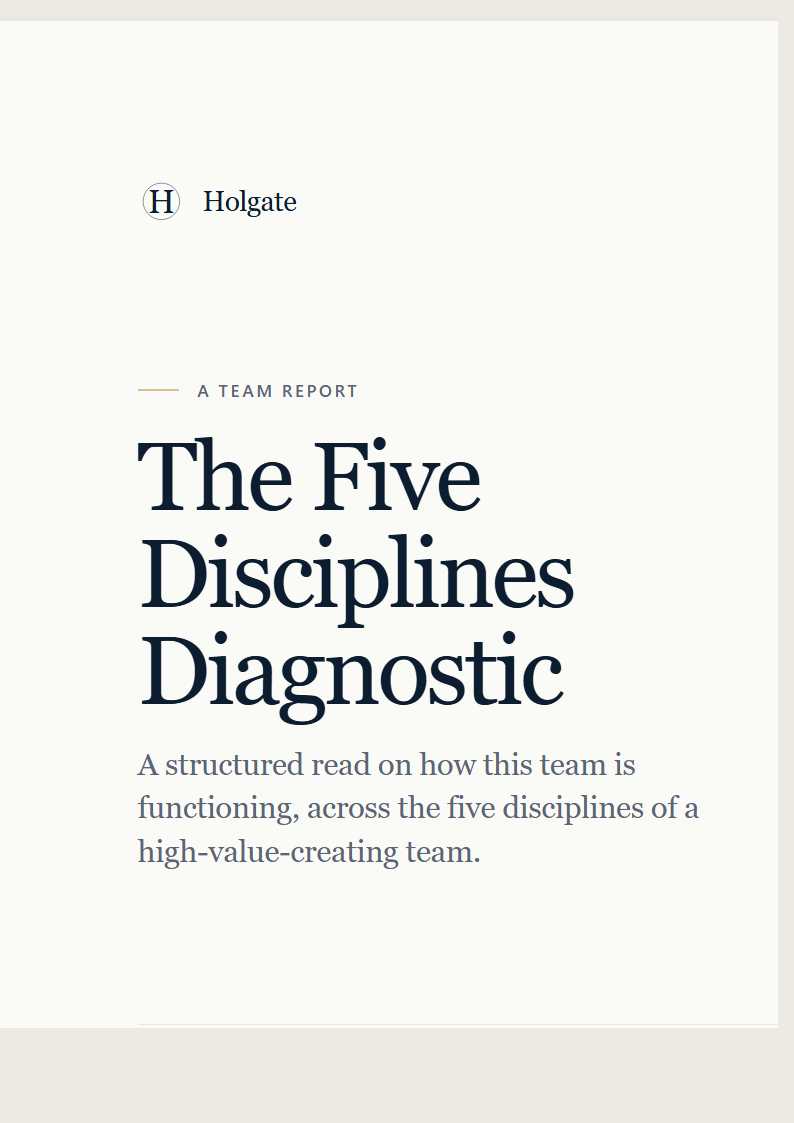
A sanitised demo report from a fictional team, "Acme Leadership Team." Every page populated from real six-person team data. The same template you would receive, with your team's findings.
Print-ready A4, 21 pages. The report is the conversation starter, not the conversation. The conversation is the debrief.
No email gate. No download. Opens in your browser.
Who this is for

You have built or inherited a team of strong individuals. They show up, they deliver, they are not in crisis. Something is off. The pattern is hard to name. You want an honest read before deciding what to do about it.
Each member responds in about twenty minutes, once. Your debrief is sixty minutes, with me.
What you walk away with
Every member rates the team honestly. Anonymously. Things they wouldn't say at a stand-up. The questions ask what rarely gets asked in the room.
A written read that names what your team actually thinks, in language you can take into the room.
Sixty minutes, just the two of us. We sit with the picture and find the move that would actually shift it.
What it measures
Built on Peter Hawkins' systemic team coaching framework. Each discipline asks one question of the team. The diagnostic measures all five, scored against where the team needs to be.
Is there a clear commission for this team, with defined success criteria, from those who brought it into being?
Mandate · Resources · Success criteria
Is this team aligned on its purpose, goals, roles, and ways of working?
Team charter · Purpose · KPIs
Does this team work together generatively, producing more than the sum of its parts?
Culture · Conflict · Ways of working
Is this team effectively connected to the people and wider system it needs to serve?
Stakeholder partnership · One voice, not many
Does this team reflect, learn and grow over time, as a team and as individuals?
Reflection · Feedback · Integration
At the centre"A high-performing team is not the same as a high-value-creating team. Most leaders confuse the two. The diagnostic measures the second."
What it costs
A leadership team running on assumed alignment spends senior salaries on it every week: rework, re-decisions, stalled priorities. $1,500 is the price of finding out.
One price, everything included:
If the debrief surfaces work worth doing, team coaching engagements run $10,000 to $25,000. The Read is priced so the decision doesn't need a business case.
If you already know you want it, pay and we start. If you'd rather talk first, take twenty minutes with me on a call. Both doors lead to the same place. You've already seen exactly what you're buying; the sample report is the product.
I write every report and hold every debrief personally. No associate model. That caps how many Reads run in a month, so if the report needs to land before a board meeting or an offsite, say so and we'll work backwards from your date.
Questions leaders actually ask
Usually the opposite of what leaders fear. Being asked what you actually think, anonymously, by a leader who wants the real answer, reads as respect. I'll give you the exact wording to send your team, framing it straight: a read on how we work as a team, not a review of any person. And if the idea of asking makes you nervous, that nervousness is itself information.
Then it's named, and you can work with it. The report describes patterns, not people, and an uncomfortable read usually confirms something you half-knew. That's what the debrief is for: sixty minutes to sit with what's on the page and work out the move. Knowing is cheaper than guessing.
No names are collected. Written answers are screened before they reach you, and anything that would identify the writer is removed. Your team is told this before they start. People write things in an anonymous questionnaire they have never said in your meetings. The gap between the two is usually the finding.
It's built for leadership teams of four to fifteen, and that's where it works best. A team of three still gets real value; at that size responses are harder to keep anonymous, so we'd talk first about how to run it well. A smaller team sometimes gains more from openness than anonymity. Above fifteen, you're usually looking at two teams wearing one name, and that's worth a conversation first.
No. The Read is built to stand alone, and some leaders run the debrief and take it from there themselves. If the report surfaces something coaching should work on, I'll say so plainly, and the report becomes the baseline. No obligation either way.
What happens after
The diagnostic is built to stand alone. Some leaders run it, hold the debrief, and that is the engagement. The report becomes the team's reference point for the next two quarters. The conversations you have with your team afterward are the work that shifts the pattern.
Other leaders use the diagnostic as the entry point to a structured three-to-six month team coaching engagement. The report becomes the baseline. Outcomes are defined up front, measured as we go. No obligation either way.
Who's behind it
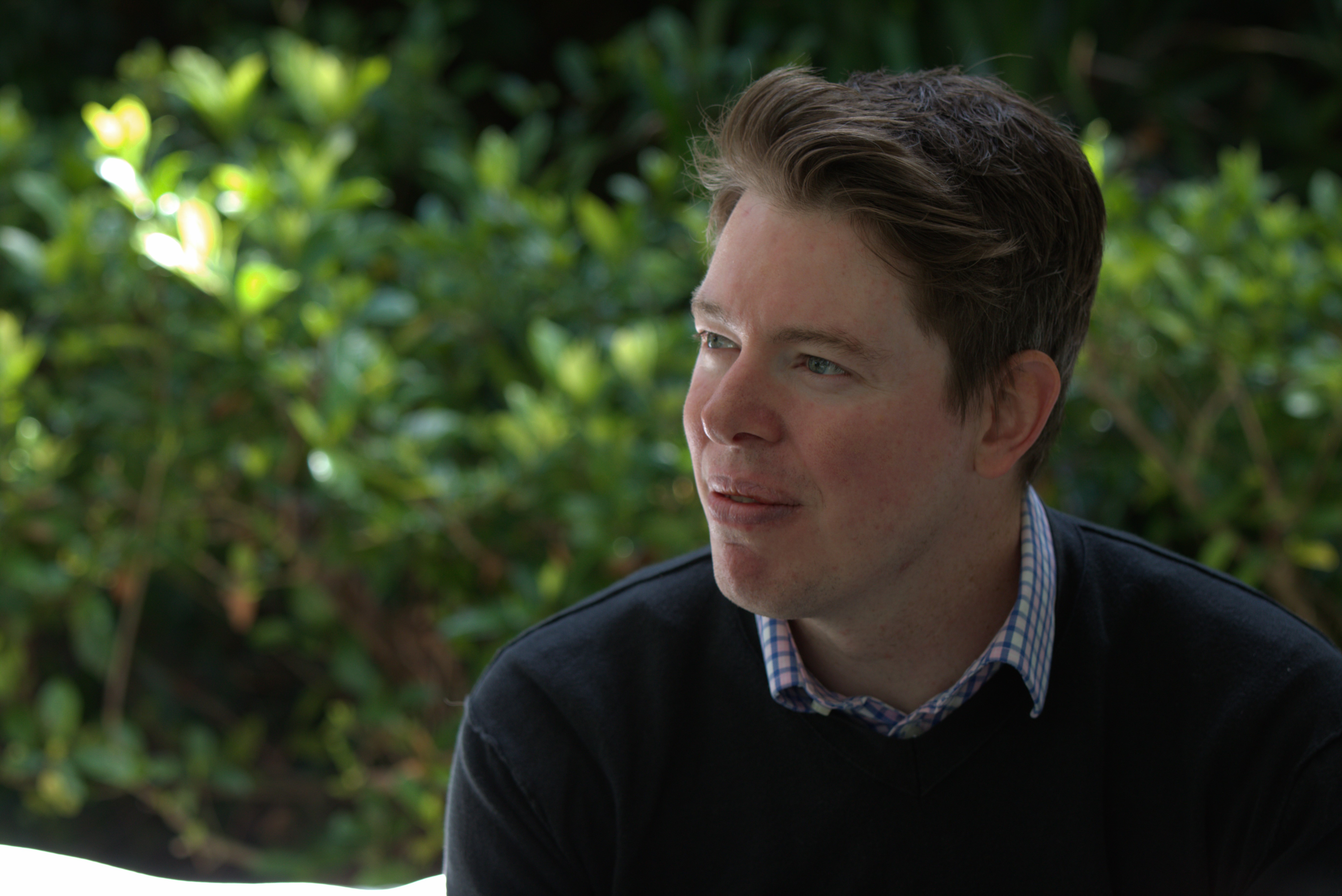
The diagnostic, the report, and the debrief are all written and held by James personally. There is no associate model.
Fifteen years designing and delivering leadership development across government and private sector. Trained directly by Peter Hawkins, the leading authority on systemic team coaching. Applied at Sydney Metro, Australia's largest public infrastructure project.
Also trained in positive psychology coaching under Valorie Burton. John Maxwell Team certified. ICF-accredited.
The only question is whether you get to hear what's in them. Start the Read, or take twenty minutes on a call first. Either way you'll know more about your team than you do today.